Sand Dunes and Paddle Tires in Arizona
Arizona’s sand can look inviting from the road, but soft dunes can bog down a machine, hide steep drop-offs, and turn a short outing into a long recovery. This guide explains where to look for dune-style riding in Arizona, how to choose and use paddle tires, and what to plan before unloading your ATV or UTV.
Where to Find Sand Dune Riding in Arizona
Copper Basin Dunes near Parker
Copper Basin Dunes, south of Parker along Arizona State Route 95, is a well-known destination for riders looking for open sand. It’s part of the broader Parker-area riding landscape, where dunes and sandy routes offer a different feel from the rocky desert tracks common elsewhere in the state. The terrain can change with wind and use, so don’t assume that yesterday’s easy line will be the same on your next visit.
Before you go, confirm the route, legal access, and staging location using current land-management information. A trail app such as onX Offroad can help you understand the surrounding route network, but don’t treat any app as a substitute for posted signs or official maps. Pay attention to land boundaries and closures as you approach the riding area, especially if your route crosses a mix of public and private ground.
For a closer look at this riding area, see [Copper Basin Dunes Riding]. If your trip might include a longer route near the Colorado River, [Copper Basin Dunes Riding] and [Arizona Trails Near the California Line] can help you think through nearby ride options and regional access.
Dunes, sandy washes, and neighboring areas are not interchangeable
Arizona has plenty of sandy terrain, but a sandy wash or sandy two-track isn’t automatically a dune field. Dunes have changing slopes, soft faces, and blind crests. A wash may be flat and sandy in one stretch, then narrow, rocky, or prone to flash flooding farther along. Those differences matter when choosing tires, planning a route, and deciding whether a machine is suited to the terrain.
Riders also sometimes mix up Arizona riding areas with well-known dune destinations just across the state line. The Imperial Sand Dunes, including the Glamis area, are in California—not Arizona. If a trip plan names a place close to the border, check the state and managing agency before you load up. Crossing between states can change the applicable access rules, permit requirements, and route restrictions.
A map is especially useful when an outing includes both open sand and connecting trails. Use onX Offroad or another mapping tool to preview the general route, then check official land-management maps and signs for current access details. [Reading an Arizona Motor Vehicle Use Map] explains why route designations matter, while [Arizona Trailhead Parking and Staging] can help you plan where to unload and prepare.
Choosing Paddle Tires for Arizona Sand
What paddle tires do and when they help
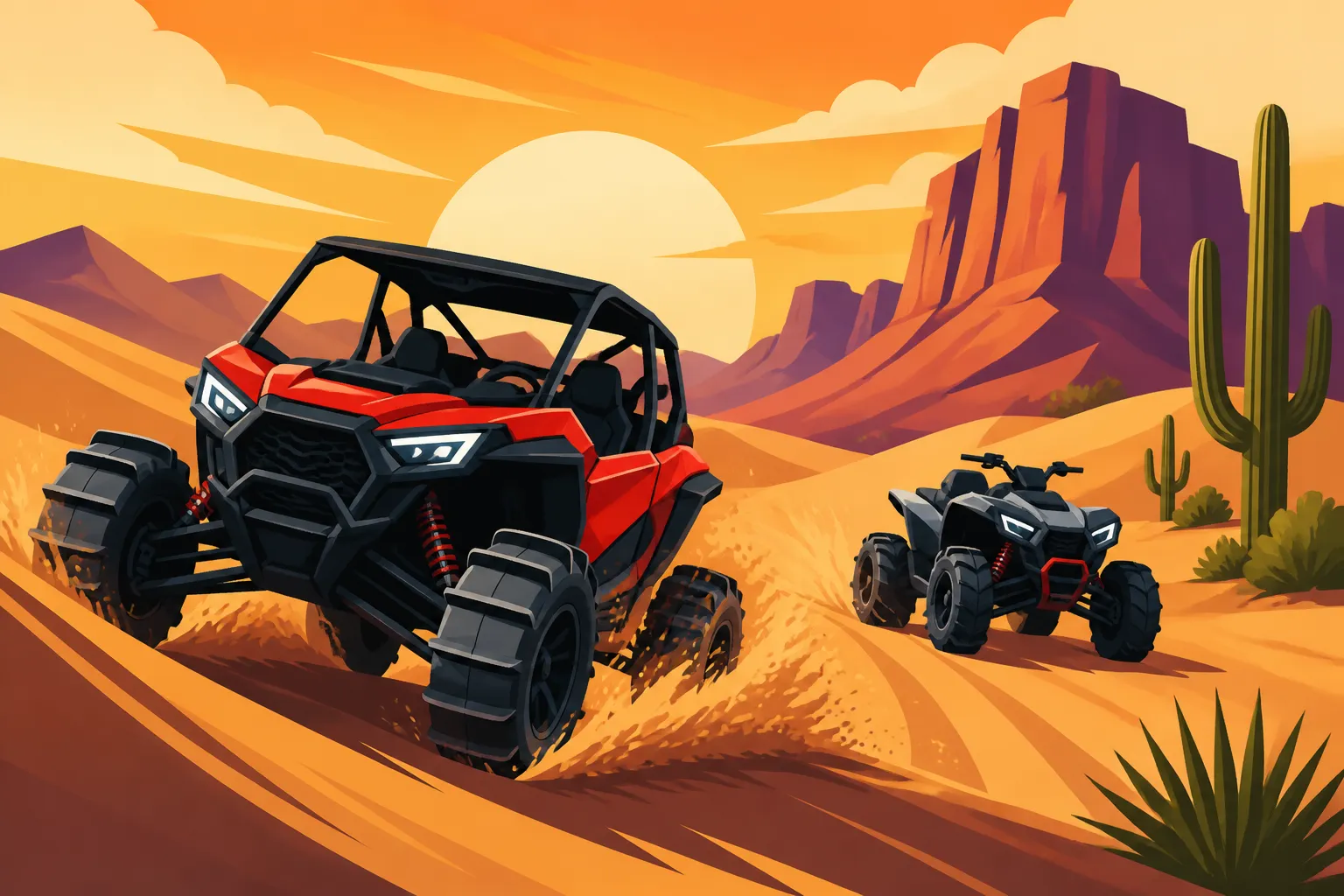
Paddle tires have raised bars, or paddles, across the tread. In loose sand, those paddles can help a tire push against the surface instead of simply spinning through it. They’re designed for specific soft-terrain conditions, not as a universal upgrade for every Arizona ride. On hardpack, pavement, or rocky routes, a paddle tire may feel awkward, wear quickly, or provide less suitable handling than a conventional tread.
The right tire depends on the machine, its power and weight, the kind of sand you expect, and how you’ll get to the riding area. A lightweight ATV used mainly in soft dunes may call for a different setup from a heavier UTV that travels over mixed sand and hard ground. Check the tire maker’s fitment guidance and the vehicle manufacturer’s limits before buying. A tire that fits on the rim may still be a poor match for the machine or the terrain.
Think about the whole trip rather than only the dune section. If you have to travel over rocky access roads or haul the machine from a distant staging area, consider whether you want to install paddles only at the riding location or bring a separate wheel-and-tire set. Swapping tires takes time and requires the right tools, but it can help avoid using a dune-specific tire on terrain it wasn’t meant for.
Match the setup to your machine and route
Paddle tires are not one-size-fits-all. The number, shape, and height of the paddles affect how a tire behaves, and different machines place different demands on the tires. A setup that works well for a light sport quad may not be suitable for a heavier side-by-side. Ask a knowledgeable tire dealer or mechanic to help match the tire to your machine, intended use, and manufacturer recommendations.
It also pays to check the rest of the vehicle before changing tires. Inspect the wheels, hubs, bearings, suspension, and drivetrain for wear, and verify that the tires have appropriate clearance through the suspension’s range of motion. On a UTV, check that the tires don’t interfere with the bodywork or nearby components when the steering is turned or the suspension compresses. If a modification changes the way the machine handles, test it cautiously in a clear, low-risk area before entering busier terrain.
If your ride includes anything beyond soft sand, consider whether a more versatile tire is a better choice. The benefit of paddles can be less useful on mixed routes where you need predictable traction over firm ground, rock, or gravel. For a trip focused on a specific dune area, dedicated paddles may make sense; for a varied weekend of routes, a general-purpose tire may be more practical.
Tire pressure and heat require attention
Tire pressure affects how a tire meets the ground, but there isn’t one safe pressure for every ATV, UTV, tire, load, and surface. Start with the vehicle and tire manufacturers’ recommendations, and don’t reduce pressure below a limit they specify. Too little pressure can increase the chance of a tire coming off the bead or being damaged, especially during a turn or when the machine is carrying passengers and gear.
Sand can tempt riders to lower pressure because a larger contact patch may help a tire float. But changes should be deliberate and conservative, not based on a number someone mentioned at a staging area. Check pressure with a reliable gauge, recheck it as conditions change, and return to the recommended setting before riding on faster, firmer surfaces or traveling on a trailer setup that requires a different pressure.
Arizona heat adds another variable. Tires and other components can warm during a long ride, and a machine sitting in the sun can become uncomfortable to inspect or handle. Don’t adjust pressure by guesswork or by copying another rider’s setup; record your starting pressure, follow the manufacturer’s guidance, and inspect the tires for cuts, bead issues, or unusual wear. For broader hot-weather preparation, [Arizona’s Best Riding Months] and [Water Planning for an Arizona Trail Day] are useful planning reads.
| Riding situation | Tire approach to consider | What to check |
|---|---|---|
| Mostly soft dune sand | A dune-specific paddle setup may be appropriate | Fitment, manufacturer guidance, and tire clearance |
| Sand mixed with rocky access routes | A versatile tire may suit the full route better | Route surface, rock exposure, and wear risk |
| Heavy UTV or loaded machine | Choose tires for the vehicle’s weight and intended load | Load limits, wheel compatibility, and handling |
| Unfamiliar dune area | Avoid making aggressive setup changes on arrival | Current conditions, safe test area, and recovery plan |
Riding Sand Dunes Safely
Read the slope before committing
A dune crest can conceal a steep drop, another rider, or a cross-traffic line. Approach unfamiliar rises at a controlled speed and avoid charging over the top when you can’t see what’s beyond it. If you don’t have a clear view, stop short and assess the route. A spotter can help, but they should stand well away from the machine’s path and out of any likely rollover or slide zone.
Choose lines that match your experience and the machine’s capability. A route that seems manageable from a distance can become difficult when the sand is loose, the face is steep, or the approach has ruts. If you’re riding with a group, agree on basic communication and passing expectations before anyone heads into the dunes. Give other riders room, avoid cutting across their line, and don’t stop in a blind spot just below a crest.
Sand conditions can shift during the day, and traffic can create unpredictable tracks. Keep a conservative margin between your ability and the terrain. If a slope looks uncertain, walk it from a safe position or choose a more gradual route. Turning around is a sensible riding decision, not a failure.
Keep momentum controlled, not reckless
Soft sand often rewards smooth, steady throttle, but that doesn’t mean going as fast as possible. Abrupt steering, hard braking, or sudden throttle changes can make the machine dig in or slide. Use inputs that are controlled and gradual, and allow enough distance to react to a changing surface or another rider.
If a machine begins to bog down, avoid repeatedly spinning the tires. Spinning can dig the machine deeper and make recovery harder. Stop safely, assess the situation, and consider whether reducing unnecessary load or choosing a different direction will help. Keep everyone clear of the machine before attempting a recovery, and use recovery points and equipment intended for the task. Never attach a strap to a part of the vehicle that isn’t designed to take the load.
Prepare for the possibility of getting stuck before you leave the staging area. Bring recovery gear that matches your machine and know how to use it. [Recovery Gear for Deep Sand] covers the basics, while [Winching Out of a Sandy Wash] offers additional recovery considerations. If you’re riding with a group, agree on a recovery plan and keep the group together rather than sending someone off alone to find help.
Make visibility and separation part of the plan
Dunes can be busy, and the rolling terrain can block sightlines. Keep a safe distance from other machines, stay alert at intersections and crest points, and avoid assuming that another rider can see you. A visible whip flag may help make a machine easier to spot in some settings, but it doesn’t replace careful speed, route choice, and communication.
Set expectations with your group before riding. Decide on a meeting point, a signal for stopping, and what everyone should do if the group gets separated. Riders should know the planned route and carry a way to contact the rest of the group if practical. Don’t let the fastest rider determine the pace for everyone else; riders with different skill levels should be able to travel at a speed that keeps them in control.
It’s also worth planning for the conditions beyond the dunes. Bring enough water, sun protection, and basic first-aid supplies, and make sure your phone or other navigation device is ready before leaving service. A downloaded route or offline map in onX Offroad can be useful where mobile coverage is unreliable, but keep a backup plan. [Cell Dead Zones in the Arizona Backcountry] and [First Aid an Hour From Pavement] cover two problems that can turn a routine day into a more serious one.
Planning a Dune Trip in Arizona
Check access, rules, and equipment before you leave
Confirm that the area is open to your type of machine and that your planned route is legal. Check current access information with the relevant land manager, then compare it with road and trail signs on the ground. Don’t create a new track to get around a closure or to reach a preferred dune face. Land boundaries can be close together, and a route that appears open on a general map may cross an area with different rules.
Make sure your vehicle is ready for the terrain. Check the tires, brakes, steering, wheel hardware, lights, and fluid levels. Secure loose cargo and confirm that passengers have appropriate safety gear. If your machine is towing a trailer, inspect the trailer and tie-downs before the trip; a dune day can be spoiled before it starts by a machine that shifts during transport.
Arizona decal and access requirements depend on the machine, the land, and the way it is registered. Don’t assume that a machine’s plate or a decal from another state automatically covers every place you plan to ride. Review [Arizona's Non-Resident OHV Decal] if you’re visiting from out of state, and check [Arizona Decal Rules at a State Park] if your plans include a state park. A decal is not a blanket permission to ride anywhere, and it doesn’t replace a land-use permit where one is required.
Choose the season and start time thoughtfully
Arizona’s low-desert riding season is often more comfortable during cooler parts of the year, but the best timing depends on the specific location and conditions. A cool morning can still warm quickly, and high temperatures can make a dune outing demanding for both riders and machines. Check the forecast, plan a conservative route, and leave room in the day to stop early if someone becomes overheated or the terrain feels harder than expected.
Starting earlier can mean more comfortable temperatures and better time to address setup questions before the riding area gets busy. It also gives you a buffer for unloading, checking tire pressure, reviewing maps, and taking a cautious first pass over the terrain. Avoid rushing through those steps just because other riders are already heading out.
Wind, rain, and changing surface conditions can alter how dunes ride. After weather moves through, inspect the area carefully and don’t enter a wash or low-lying route if there’s a risk of flooding. Read [Arizona Monsoon Season and Flash Flooding] for additional desert-weather planning, and check current notices before you travel. If the forecast or access information is unclear, postponing the ride is often the safer option.
Pack for more than the ride itself
A good dune-day checklist includes more than a helmet and a full tank. Bring water for everyone, protective clothing suitable for the weather, sunscreen, and a first-aid kit. Include tools and spare items appropriate to your machine, plus recovery equipment that you know how to use. Keep items secured so they can’t shift or fall out when the machine moves over soft ground.
Plan for the drive to and from the riding area, too. Confirm that your trailer is suitable for the machine and that the load is secure before leaving. Bring the equipment needed to change a tire or make a basic repair if you’re prepared and qualified to do so. If a problem is beyond your ability to address safely, stop and seek appropriate help rather than attempting an improvised repair in a hazardous location.
Finally, make sure every rider understands the plan. Share the route, expected return time, and meeting point with someone who isn’t on the ride. Keep the group together, check in at planned stops, and turn back if conditions or equipment problems make continuing a poor choice. A well-planned outing is not about covering the most ground; it’s about getting everyone and every machine back safely.
Common Paddle-Tire and Dune-Riding Mistakes
Buying tires before checking the full route
A common mistake is choosing paddle tires because the destination has “sand” in its name, without considering the access road or the rest of the planned ride. If your route includes firm ground, rocks, or long stretches of mixed terrain, a specialized dune tire may be less useful than expected. Think about where the machine will travel from the trailer to the dunes and whether you can change tires at the staging area.
Another mistake is treating recommendations from a different machine as directly transferable. Tire choice depends on vehicle type, weight, power, tire dimensions, and riding style. A friend’s setup may be a helpful starting point for questions, but it isn’t proof that the same tire will suit your ATV or UTV. Check manufacturer guidance and ask a qualified tire professional when fitment is uncertain.
Don’t overlook the cost and time of maintaining a separate dune setup. You may need compatible wheels, storage space, tools, and a safe place to make the change. If those practicalities don’t fit your trip, a suitable all-around tire may be the more useful choice—even if it gives up some performance in very soft sand.
Changing pressure without a plan
Lowering tire pressure by guesswork is another avoidable risk. A pressure that works for one tire, vehicle, rider, and load may be unsuitable for another. Follow the vehicle and tire manufacturers’ limits, use a gauge, and make any changes carefully. If you’re uncertain, keep to the recommended setup rather than experimenting in a busy dune area.
Likewise, don’t assume that lower pressure is always better. Too little pressure can create handling problems or damage the tire and wheel, and the risks can increase when a machine is loaded or moving quickly. Be especially cautious about pressure changes before riding on firm or rocky ground, where a dune-oriented setup may not behave as expected.
Keep a record of the starting pressure and any permitted adjustment you make. That simple habit can help you recognize changes, avoid relying on memory, and return the tire to an appropriate setting when the ride changes. Pressure is only one part of the setup; it can’t make an unsuitable tire, unsafe route, or overloaded machine safe.
Treating recovery as someone else’s problem
Riders sometimes assume that a group will always be able to pull out a stuck machine. That can leave everyone improvising when a recovery point is inaccessible, the strap is unsuitable, or the sand is too soft for the recovery vehicle. Carry equipment intended for your machine, learn the manufacturer’s recovery guidance, and discuss safe recovery roles before anyone needs them.
Don’t stand near a tensioned strap or cable, and don’t attach recovery equipment to an unapproved point. Keep bystanders well away and stop if the recovery setup is unclear. A quick pull that seems harmless can injure someone or damage a machine. If conditions make a recovery unsafe, wait for qualified help instead of escalating the attempt.
The best recovery is often the one you avoid. Ride within your skill level, inspect blind crests, use smooth inputs, and stop before tires dig in deeply. Leave room in your plan for turning back, and don’t let pressure from the group push you into a line you wouldn’t choose on your own.
Disclaimer
This article is for general informational purposes only and does not constitute professional advice. Laws, prices and regulations vary by location and change over time. Consult a qualified professional for guidance on your specific situation.