Bulldog Canyon’s Sandy Washes
Bulldog Canyon’s sandy washes can look like an easy way through the Sonoran Desert, until a soft stretch bogs down a machine or a storm turns a dry channel into a hazard. This guide explains how to prepare, read the terrain, choose a sensible pace, and ride more responsibly in the Bulldog Canyon area near Mesa and Apache Junction.
What to expect in Bulldog Canyon
Sandy washes are not all the same
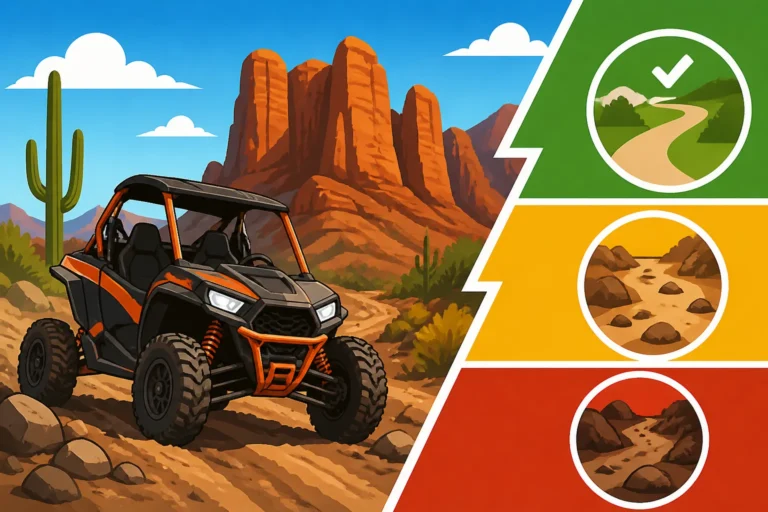
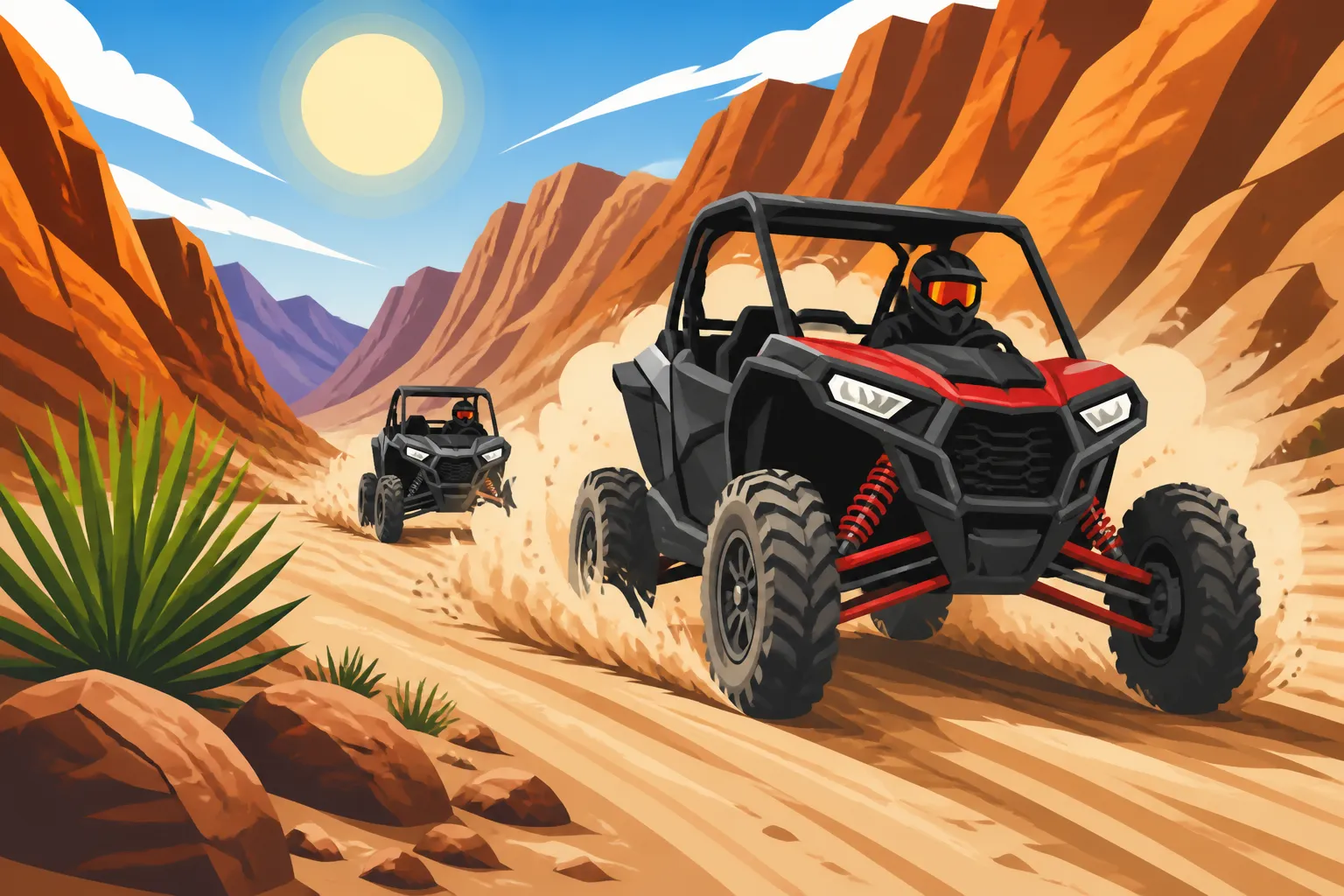
A wash can change from firm, compacted ground to deep, loose sand in a surprisingly short distance. The surface may look uniform from the driver’s seat, but subtle differences in color, tire tracks, vegetation, and slope can signal a change in traction. A broad, pale stretch might be easy to cross when dry, while a narrow section with soft shoulders can demand steady momentum and careful line choice.
That variation is part of what makes Bulldog Canyon appealing—and what catches new visitors off guard. A side-by-side may float across a section that feels laborious on an ATV, while both can bog down if the sand is unusually loose or the driver stops in the wrong place. Conditions also shift with traffic and weather. A wash that was manageable on a previous visit may have ruts, a berm, or fresh deposits after a storm.
Before leaving the staging area, talk with your group about what you’ll do if someone loses momentum. Agree to avoid sudden steering, aggressive throttle, and close following in dusty conditions. On soft ground, a smooth, consistent pace is usually more useful than repeatedly speeding up and slowing down. If the trail ahead looks uncertain, pause somewhere stable and assess it rather than charging into a section you can’t easily reverse out of.
Stay on routes that are open to motorized travel
Bulldog Canyon is a trail network, not an invitation to roam across the desert. A wash or visible tire track may look like a tempting shortcut, but that does not mean it is an authorized motorized route. Keep your wheels on signed or mapped routes open to your type of vehicle, and don’t create a bypass around a gate, obstacle, or damaged section. Avoiding a muddy or difficult spot by driving across the desert can damage soil and vegetation and may put you outside the permitted route system.
That matters especially where a broad wash seems to offer several possible lines. Stay on the established route instead of fanning out to find the firmest-looking surface. Repeatedly widening a track can damage the desert and make the route harder for everyone to follow. If a route is blocked, closed, or too difficult for your group, turn around when it is safe rather than cutting a new path around the problem.
Access arrangements, gate requirements, and route conditions can change, so check official Tonto National Forest information before traveling. The guide to [Bulldog Canyon Permit and Gate Codes] can help you understand what to verify before you set out. Treat the access details as part of trip planning—not as something to sort out after you have arrived at a locked gate.
Plan the route before you unload
Check access, closures, and maps
A good Bulldog Canyon trip starts before the trailer leaves home. Confirm that the area and the route you intend to ride are open, and find out what access authorization or gate instructions apply. Do not assume that an old gate code, a screenshot saved from a past trip, or another rider’s recollection will still work. Read the current official instructions, follow any permit conditions, and make sure everyone in your group understands where access is allowed.
Bring a reliable map that shows the authorized motorized routes. A phone map is useful, but it should not be your only navigation plan: batteries drain, devices overheat, and some backcountry areas have weak or nonexistent cell service. Download maps for offline use before you leave home, carry a charged power bank if appropriate, and bring a paper map or another backup you know how to read. The broader guide to [Finding the Right Travel Management Map] explains why route status matters as much as the route line itself.
Apps such as onX Offroad can help you review route options and keep track of your position, particularly when you prepare offline maps in advance. Still, use a mapping app as a planning and navigation aid, not as permission to ride every line displayed on a screen. Compare the route with current official information and signs on the ground, and turn around if markings or closure notices conflict with what you expected.
Match the outing to your machine and group
Think about your least-experienced driver and the least capable machine in the group when choosing a route. A confident driver on a well-equipped side-by-side may be comfortable with loose sand, but that does not mean a newer ATV rider will find the same stretch easy. If one person is nervous, the whole group benefits from a conservative plan with room to stop, regroup, and turn around.
Vehicle size matters, too. A full-size rig may need more room to turn around than a compact ATV, and narrow sections can make passing or correcting a poor line difficult. Before committing to a route, consider ground clearance, tire condition, fuel range, passenger load, and the machine’s recovery points. For more context on selecting routes for larger vehicles, see [Arizona Trails Rated for Full-Size Rigs].
Keep the day’s plan realistic. Choose a turnaround point before you start, and let someone outside the group know where you expect to ride and when you plan to return. If the route is taking longer than expected, the weather is changing, or a driver is tiring, shorten the ride. Reaching a distant endpoint is not worth pushing a machine or rider beyond a safe margin.
| Planning question | Why it matters | Practical approach |
|---|---|---|
| Is the route open and authorized? | A visible track may not be open to motorized use. | Check official forest information and follow posted signs. |
| Does the group have access instructions? | Gate access may require advance preparation. | Read current permit and gate directions before leaving home. |
| Can the map work offline? | Cell service may be unreliable in the backcountry. | Download maps and carry a backup navigation option. |
| Is the route suitable for every machine? | Sand, tight turns, and limited turnaround space affect vehicles differently. | Plan around the least capable vehicle and least experienced rider. |
| Is weather changing? | Rain can make washes dangerous or impassable. | Check the forecast and be prepared to cancel or turn back. |
For staging and parking considerations before you unload, [Arizona Trailhead Parking and Staging] offers useful preparation points for an OHV outing.
Ride sandy washes with control
Choose a smooth line and steady pace
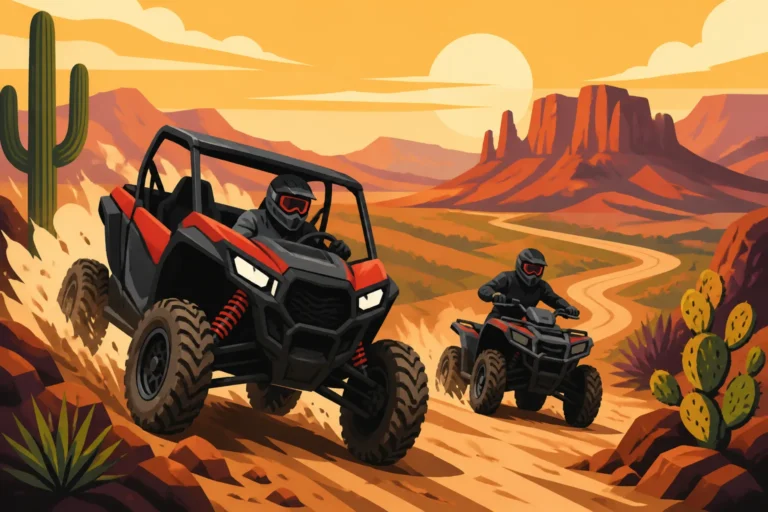
In sand, abrupt inputs can make a machine harder to control. Sudden braking may cause a tire to dig in, and sharp turns can push the front end wide. Aim for a smooth line, keep a comfortable following distance, and look far enough ahead to spot changes in surface before reaching them. If visibility is poor because of dust, slow down and leave more space rather than following another vehicle’s tracks by feel.
Keep your speed appropriate to the visibility, route width, and experience of the group. Momentum can help a machine move across loose ground, but “keep momentum” does not mean drive fast or charge into unknown terrain. A steady, measured pace gives the driver time to react and makes it easier for the group to stay together. Avoid stopping in the softest section if there is a firm, safe place nearby to regroup.
If your machine starts to lose forward movement, resist the instinct to spin the tires harder. Excessive wheelspin can dig the machine deeper and damage the route. Ease off, straighten the wheels if appropriate, and make a calm assessment. The best next move depends on the machine and the terrain; it may be safer to reverse along your existing track or use recovery equipment than to keep trying to power through.
Give other trail users room
Bulldog Canyon is a shared recreation area. You may encounter other OHVs, hikers, or people staging near access points, and dust can reduce visibility for everyone. Slow down near other visitors, avoid passing in a cloud of dust, and give people space to move safely off the route. A group should stay together without bunching up: too little space makes it harder to react, while too much can leave the last rider unsure of the route.
Before crossing a wash or approaching a bend with limited visibility, reduce speed enough to respond to someone coming the other way. Do not assume that another rider can see or hear you through dust, engine noise, or terrain. Use clear, simple communication within your group, and agree on a place to stop if the group gets separated.
If you need to pause, move out of the main travel line where the ground is stable and sightlines are good. Avoid stopping where another vehicle may crest a rise, round a blind corner, or enter a narrow section without room to pass. Small courtesies—waiting for dust to settle, yielding thoughtfully, and staying on the established route—help keep a popular area safer and more enjoyable.
Watch weather and wash hazards
Treat rain as a serious change in conditions
A wash can be dry beneath a clear patch of sky and still become dangerous when rain falls elsewhere in the drainage. Water may travel from a storm that is difficult to see from your position, and soft sand can turn into sticky mud or conceal a firm-looking surface with unstable edges. Never treat the absence of rain directly overhead as proof that a wash is safe.
Check the forecast for the area and the wider drainage before riding, and take changing clouds, wind, thunder, or rainfall seriously. If rain is approaching or water is moving through a wash, do not enter it. Avoid parking or waiting in a low channel. Move to higher, stable ground only when you can do so safely, and do not attempt to drive through flowing water or around a closure.
Arizona’s monsoon season can bring fast-changing conditions, but flash flooding is not limited to one season. The background information in [Arizona Monsoon Season and Flash Flooding] is a useful reminder that a dry desert channel should not be mistaken for a safe place to shelter. For specific Bulldog Canyon conditions after rainfall, review [Riding Bulldog Canyon After Rain] before deciding whether to go.
Know when turning around is the right call
A route can become unsafe even without a dramatic flood. Fresh erosion, washed-out edges, deep ruts, standing water, or a soft surface that hides rocks can all make a familiar wash more difficult. If the route has changed since your last visit, stop where you have room to assess it. Look for a safe way back and avoid walking into a questionable area where water, unstable banks, or passing machines could put you at risk.
Turning around is not a failure or a wasted trip. It is often the clearest sign that a group planned well enough to recognize when the conditions no longer fit the plan. Set that expectation in advance so no one feels pressured to continue just because the group has driven a long way or unloaded the machines.
If the weather turns, the route is blocked, or a rider becomes uncomfortable, take the safest available route back to a known point. Don’t split the group without a clear plan, and don’t leave someone behind to find help unless there is no safer option. The best decision is the one that brings everyone and every machine back without adding unnecessary risk.
Prepare for breakdowns and desert conditions
Carry water and essential supplies
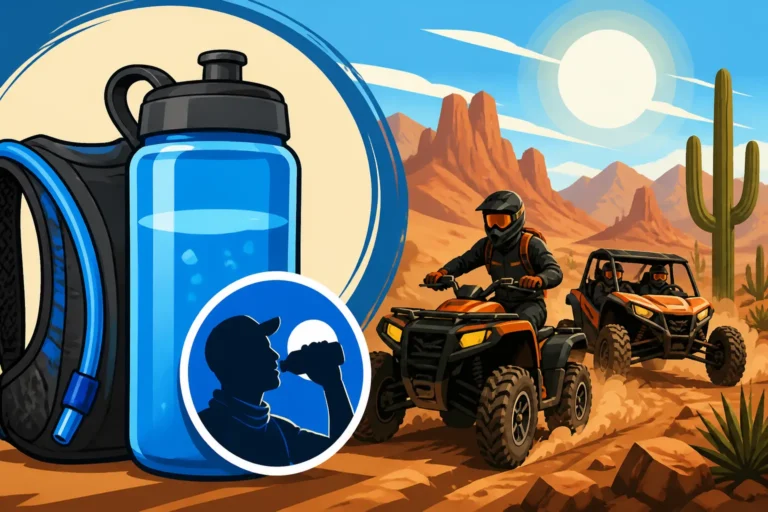
A short ride can take longer than expected when a machine gets stuck, someone has a flat, or the group needs to turn around. Carry enough water for the people in your group, and plan for conditions that could delay you—not just the time you hope to spend riding. Heat, sun, dust, and exertion can make a seemingly easy outing feel demanding, especially if a driver is inexperienced or a passenger is not used to the desert.
Pack basic first aid, sun protection, food or snacks, and any medication a group member may need. Bring a charged phone, but don’t rely on it for emergency communication where coverage is uncertain. Tell someone your route and expected return, and agree on what they should do if you do not check in. For additional backcountry preparation, read [How Much Water a Desert Ride Needs] and [Cell Dead Zones in the Arizona Backcountry].
Dress for sun and dust, including eye protection suitable for the conditions. Keep water and essentials accessible rather than buried under gear where they cannot be reached easily. If you are riding with children or first-time passengers, check in with them during the outing. Tiredness, thirst, and discomfort can appear as irritability or silence before someone says directly that they need a break.
Be ready to recover without making things worse
A machine stuck in sand can turn a relaxed ride into a stressful one, especially if the group has no recovery plan. Carry equipment suited to your vehicle and know how to use it before you need it. That may include recovery straps, gloves, and a shovel, along with secure recovery points appropriate to the machine. Avoid attaching a strap to a part that was not designed for recovery, and keep people clear of tensioned equipment.
When a machine bogs down, stop and assess the situation before several people start pulling or digging at once. Check whether the tires are buried, whether the vehicle is resting on its frame, and whether a safe route back is available. Clear loose material around the tires if it is safe to do so, and avoid spinning the tires deeper into the sand. If you don’t have the right equipment or conditions are deteriorating, use a safer plan rather than improvising a risky pull.
Recovery practice is especially helpful for drivers unfamiliar with soft sand. Before the trip, review [Recovery Gear for Deep Sand] and make sure everyone understands basic communication and safe spacing. An app such as onX Offroad may help the group keep track of its location while planning a route, but navigation does not replace recovery skills, supplies, or sound judgment. A final check of the route, weather, equipment, and group comfort can help make Bulldog Canyon’s sandy washes a rewarding ride rather than a difficult day in the desert.
Disclaimer
This article is for general informational purposes only and does not constitute professional advice. Laws, prices and regulations vary by location and change over time. Consult a qualified professional for guidance on your specific situation.