A DUI on an OHV in Arizona
Many riders hit the Arizona trails, enjoying the vast deserts and winding paths, sometimes under the false impression that the rules are different for their off-highway vehicle (OHV) than for a regular car. This misunderstanding can lead to serious trouble, specifically a DUI (Driving Under the Influence) charge, which carries heavy consequences that can derail your life far beyond a fun weekend ride. This guide aims to clear up the common misconceptions and lay out exactly what a DUI on an OHV in Arizona means, covering everything from the immediate roadside stop to the long-term legal and financial repercussions, and most importantly, how to avoid this costly mistake.
Understanding Arizona's DUI Laws and OHVs
It's a common misconception among OHV enthusiasts that because they're "off-road" or on a dirt track, the same stringent DUI laws that apply to street vehicles somehow don't apply to their ATV or side-by-side. Nothing could be further from the truth. In Arizona, the legal framework for operating an OHV under the influence is virtually identical to that for driving a car while impaired. This can be a rude awakening for someone who thought a few beers around the campfire, followed by a short ride to another camp, was harmless. The Arizona Revised Statutes (A.R.S.) are very clear that operating any motor vehicle, including an OHV, while impaired to the slightest degree, or with a blood alcohol concentration (BAC) of 0.08% or higher, is illegal.
How Arizona Law Views OHV DUIs
Arizona's DUI statutes are broad, designed to cover any "vehicle" that is "driven or in actual physical control." An OHV, whether it's an ATV, UTV, sand rail, or dirt bike, falls squarely under the definition of a motor vehicle in this context. This means that if you're found operating your quad on a designated trail, a county road, or even just puttering around a staging area after having consumed alcohol or drugs, you are subject to the same laws as someone driving a pickup truck on State Route 87. There's no special "trail exception" or "desert pass" that exempts you from these serious laws. Law enforcement, whether it's a local sheriff, an Arizona Game and Fish Department officer, or a Forest Service ranger, has the authority to enforce these statutes wherever OHVs are legally operated. Many riders are surprised to learn that even pulling a machine with a tow strap while impaired can lead to a DUI charge, as it can still be considered having "actual physical control."
The Same Rules Apply: Impairment and BAC
The two primary ways an OHV operator can be charged with a DUI in Arizona are by being "impaired to the slightest degree" or by having a BAC of 0.08% or higher. The "impaired to the slightest degree" standard is particularly broad and subjective, meaning an officer can make an arrest based on observations alone, even if your BAC is below 0.08%. This could be anything from slurred speech and unsteady balance to delayed reactions or difficulty following instructions. For OHV riders, this can be even more pronounced due to the inherent demands of off-road riding, which require quick reflexes and keen judgment. A trail that might be easy sober could become dangerous and lead to an accident if you're even slightly impaired, giving law enforcement clear grounds for a stop.
Furthermore, Arizona has "extreme DUI" and "super extreme DUI" thresholds, where BAC levels of 0.15% or 0.20% or higher, respectively, bring even stiffer penalties. These higher BAC levels don't just apply to cars; they apply equally to OHVs. So, if you're caught operating your side-by-side with a BAC of 0.16%, you're facing an extreme DUI charge, with all the enhanced fines, jail time, and license suspension that come with it. It’s a sobering thought that the same limits that apply to a car on the highway apply just the same when you're navigating a sandy wash or a rocky mountain trail. [Arizona Alcohol Limits for OHV Operators] clearly outlines these critical thresholds.
What "Operating" an OHV Means in This Context
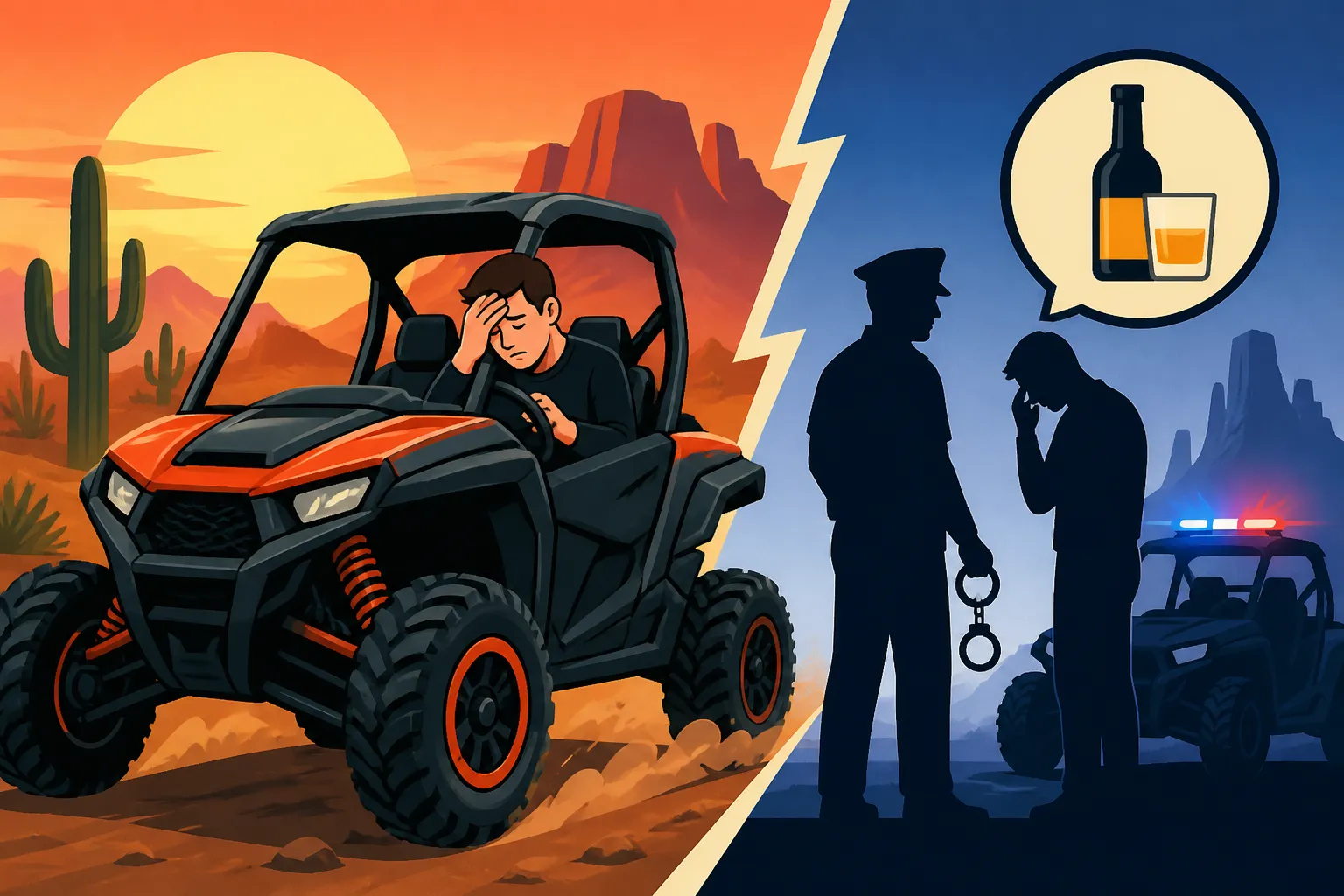
"Operating" an OHV, for DUI purposes, is interpreted very broadly under Arizona law. It doesn't just mean actively driving down a trail at speed. If you are in "actual physical control" of the vehicle, you can be charged. This includes sitting in the driver's seat with the keys in the ignition, even if the engine isn't running. It could even apply if you're sleeping off an impairment in the driver's seat of your UTV, with the potential for the vehicle to be operated. Imagine you've had too much to drink at a remote campsite. You decide to "sleep it off" in your side-by-side, keys perhaps in the console or even in the ignition, and an officer comes across you. That scenario could easily lead to an OHV DUI charge, regardless of whether you ever actually moved the machine. The intent is to prevent impaired individuals from being in a position to operate a motor vehicle, which includes OHVs.
This expansive definition is crucial for riders to understand, especially when they might be camping or staging their machines. It's not enough to simply pull over and stop. To truly avoid a charge, an impaired individual must not be in a position to operate the OHV. This often means handing the keys to a sober friend, removing the keys from the vehicle entirely, or ensuring you're not in the driver's seat. Many riders, especially in remote areas, might think they're safe from enforcement. However, [Deputy Enforcement on Arizona Back Roads] confirms that law enforcement patrols these areas specifically to ensure safety and compliance with all laws, including DUI.
The Immediate Consequences of an OHV DUI Arrest
The moment an officer suspects you of operating an OHV under the influence, the situation rapidly escalates. This isn't just about getting a ticket; it's about a complete disruption of your outing and potentially your freedom. The process involves a series of steps, each with immediate and often stressful consequences, turning a planned day of enjoyment into a legal nightmare. Understanding these immediate effects can underscore the importance of responsible riding.
Roadside Stops and Field Sobriety Tests
An OHV DUI investigation often begins with a roadside stop, which might be triggered by erratic driving, a minor accident, or even a simple compliance check where an officer observes signs of impairment. Once stopped, the officer will typically ask a series of questions and observe your demeanor. If they have reasonable suspicion of impairment, they will likely ask you to perform Standardized Field Sobriety Tests (SFSTs). These tests, like the Walk-and-Turn, One-Leg Stand, and Horizontal Gaze Nystagmus (HGN), are designed to assess your physical and mental faculties.
It's important to remember that these tests are subjective, and the environment (uneven desert terrain, dust, wind, bright sun) can make them even more challenging on an OHV trail. Refusing these tests can have implications for your case, but performing them can provide evidence for the prosecution. Following the SFSTs, an officer will likely request a preliminary breath test (PBT) at the scene. While this initial device isn't always admissible in court for exact BAC, it helps an officer determine if probable cause for arrest exists. If an officer believes you are impaired based on their observations and the results of these tests, you will be arrested on the spot. [Arizona Penalties for Reckless Riding] often go hand-in-hand with DUI arrests, as impaired operation is inherently reckless.
Custody, Impoundment, and Initial Hearings
Once arrested for an OHV DUI, you'll be taken into custody. This means your fun day of riding is over. You'll be transported to a local law enforcement facility or jail for booking, which involves fingerprinting, photographing, and processing. During this time, you'll likely be asked to submit to an evidentiary breath test (using a more accurate machine like an Intoxilyzer) or a blood test, which provides the definitive BAC reading for legal proceedings. Arizona has an "implied consent" law, meaning that by operating a motor vehicle (including an OHV) on public lands, you've implicitly consented to these tests. Refusal to take these tests can lead to immediate and automatic suspension of your driver's license, even before a conviction, and can be used as evidence against you in court.
Your OHV will also be impounded. This is a significant logistical headache, especially if you're in a remote area or far from home. Your machine will be towed away by a contracted company, incurring towing and storage fees that begin immediately and accrue daily. If you were riding with others, they might be left stranded, or someone will have to arrange alternative transportation and recovery of your rig. Following booking, you'll have an initial court appearance, often called an arraignment, where you'll be formally charged and bail may be set. This entire process can be incredibly disorienting and stressful, far from the peaceful desert escape you might have planned.
Financial Hit: Towing, Fees, and Bail
The financial fallout from an OHV DUI begins almost instantly. First, there are the towing and impoundment fees for your OHV. These costs can quickly add up, easily running into hundreds of dollars just for the initial tow and a few days of storage. If your machine is stored for an extended period, these fees can become exorbitant. Then, there's the cost of bail. Depending on the severity of the charge and your criminal history, bail could range from a few hundred to several thousand dollars. If you can't post bail, you'll remain in custody until your court date, which could be days or weeks away.
Beyond these immediate out-of-pocket expenses, you'll likely face attorney fees. Navigating the complexities of DUI law requires legal expertise, and competent legal representation comes at a significant cost. While you have the right to represent yourself, the chances of a favorable outcome without a lawyer are significantly reduced. The cost of just the immediate aftermath—towing, impoundment, bail, and initial legal consultations—can be a staggering blow, quickly making that fun ride the most expensive outing of your life. It's a stark reminder that [Arizona OHV Ticket Amounts] can be steep, but a DUI is in a different league entirely.
Long-Term Ramifications and Penalties
An OHV DUI in Arizona isn't just a temporary inconvenience; it leaves a lasting mark. The legal penalties are severe, designed to deter impaired driving, and they extend far beyond a simple fine. These consequences can impact your ability to drive, your financial stability, and even your personal and professional life for years to come. Understanding the full scope of these long-term effects is critical for any OHV operator.
License Suspension and Driving Privileges
One of the most immediate and impactful long-term consequences of an OHV DUI conviction is the suspension of your driver's license. Yes, even if you were operating an OHV, your driver's license (the one for your car) is what will be suspended. For a first-time conviction, you're typically looking at a minimum of 90 days of suspension, with longer periods for extreme or super extreme DUIs, or repeat offenses. This isn't just a ban on driving your OHV; it's a ban on driving any motor vehicle, including your car, truck, or motorcycle. Losing your driving privileges can severely disrupt your daily life, making it difficult to get to work, run errands, or transport family members.
To reinstate your license after the suspension period, you'll often need to complete DUI screening and alcohol education or treatment programs, install an ignition interlock device (IID) in any vehicle you drive for a specific period, and pay significant reinstatement fees. The IID, a device that requires you to blow into it and pass an alcohol test before your vehicle will start, is an additional cost and a constant reminder of the DUI. Furthermore, [Losing Arizona Riding Privileges] can extend to your ability to even operate your OHV legally on public lands, as the same impairment standards apply.
Fines, Jail Time, and Mandatory Classes
The financial penalties for an OHV DUI conviction in Arizona are substantial. For a first offense, fines and surcharges can easily exceed $1,250, but these figures can rise dramatically for subsequent offenses or higher BAC levels. These aren't just nominal fees; they are serious financial burdens. Beyond fines, jail time is a real possibility. Even a first-time DUI carries mandatory jail sentences: typically 10 consecutive days for a regular DUI, 30 consecutive days for an extreme DUI (BAC 0.15-0.199%), and 45 consecutive days for a super extreme DUI (BAC 0.20% or higher). While some jail time can sometimes be converted to home detention with an ankle monitor, the fact remains that a conviction will likely involve time spent under supervision or incarceration.
In addition to fines and jail, the court will typically mandate enrollment in alcohol or drug screening, education, and treatment programs. These programs are not only time-consuming but also carry their own fees, adding to the overall cost. These mandatory classes are designed to address the underlying issues related to impaired driving and are a prerequisite for license reinstatement. The combination of these penalties makes an OHV DUI a profoundly expensive and disruptive experience, far more severe than most riders anticipate.
The Impact on Your Record and Insurance
An OHV DUI conviction will become a permanent part of your criminal record. This can have far-reaching implications, affecting employment opportunities, professional licenses, and even housing applications. Many employers conduct background checks, and a DUI conviction can be a significant red flag, potentially limiting career advancement or even preventing you from getting certain jobs. It can also impact your ability to travel internationally, as some countries have strict entry requirements for individuals with DUI convictions.
Furthermore, your vehicle insurance premiums will skyrocket. A DUI conviction labels you as a high-risk driver, leading to substantially higher rates for both your automotive and OHV insurance for years to come. Some insurance companies might even drop your coverage entirely, forcing you to seek out specialized, more expensive policies. This increased insurance cost can translate into thousands of extra dollars over several years. [Arizona Insurance Minimums for Road Riding] become particularly critical if you ever plan to make your OHV street legal, as a DUI will complicate meeting those requirements and proving coverage. The ripple effect of a DUI conviction touches almost every aspect of your life, making it a truly regrettable and costly mistake.
Preventing an OHV DUI and Staying Safe
Given the severe consequences, preventing an OHV DUI should be a top priority for every rider. It's about more than just avoiding legal trouble; it's about personal safety, the safety of your riding companions, and preserving the enjoyment of Arizona's incredible trail systems. Responsible riding goes hand-in-hand with making smart choices, especially when alcohol or other impairing substances are involved.
Designated Drivers and Safe Transport Options
The most effective way to prevent an OHV DUI is to plan ahead and completely separate drinking from operating your machine. If you anticipate consuming alcohol or other impairing substances during a ride or at a campsite, designate a sober driver for your OHV. This person should commit to abstaining from all impairing substances and be responsible for operating the machine, even if it's just moving it a short distance around a camp. This designated driver should also be aware of [Arizona Rules for Operators Under 12] and other age restrictions if children are involved, ensuring everyone is safe and legal.
For situations where no designated OHV driver is available, explore alternative transport options. Can you walk to a nearby campfire? Is there a sober friend with a street-legal vehicle who can shuttle you? The key is to never, ever get into the driver's seat of your OHV if you've been drinking or using drugs. Remember, the desert environment can be unpredictable, and your judgment and reaction time are crucial for safe navigation. Losing your bearings, especially after dark, is dangerous enough without impairment.
Planning Ahead for Social Rides
Many OHV rides are social events, often involving group camping and camaraderie where alcohol might be present. This is precisely when planning ahead becomes crucial. Before the trip, have a clear conversation with your riding group about responsible alcohol consumption and the absolute prohibition of impaired OHV operation. Establish a "no keys after drinks" policy. If you know you'll be drinking, plan to park your OHV for the night and do not move it until you are completely sober the next day. This might mean having a separate "hangout" spot away from your machines or designating a specific time when all OHV operation ceases.
It's also wise to consider the timing of your rides. If you plan to enjoy some adult beverages in the evening, make sure your riding for the day is completely finished well beforehand. The desert can be a deceptive place, and even a short, familiar route can become dangerous when judgment is impaired. Planning also extends to understanding what [What an Arizona Ranger Asks a Rider For] during a stop, which will typically include proof of identity and registration, and any signs of impairment will escalate the interaction immediately.
Understanding Your Limits and the Desert Environment
Beyond the legal aspect, responsible riding means understanding your own limits and how substances can affect your ability to safely operate an OHV, especially in the unique and often challenging Arizona desert environment. Fatigue, heat exhaustion (common during [Riding an Arizona Road at 110 Degrees]), dehydration, and even just the cumulative effect of a long day of riding can all impair judgment. Introducing alcohol or drugs on top of these factors significantly magnifies the risk. What might seem like a manageable buzz in a controlled environment can become a severe impairment on a dusty, rocky, or sandy trail that demands constant attention and quick reactions.
The desert itself presents numerous hazards: unseen rocks, sudden washes, unpredictable wildlife, and vast, open spaces where getting lost is a real danger. Operating an OHV while impaired increases your risk of an accident, not just for yourself but for any passengers you might have and other riders on the trail. A simple tip-over, which might be minor when sober, could lead to serious injury or even worse when impaired, especially if you're not wearing proper safety gear like a helmet, as highlighted in [Arizona Helmet Rules for Riders Under 18]. Prioritizing safety, making sober choices, and respecting the laws are the best ways to ensure your desert adventures remain enjoyable and free from severe legal consequences.
Disclaimer
This article is for general informational purposes only and does not constitute professional advice. Laws, prices and regulations vary by location and change over time. Consult a qualified professional for guidance on your specific situation.